When you think about being alone in a video game, you usually think of it as a problem, right? A void that needs to be filled with companions, witty dialogue, and a laundry list of quests. But in the cold, dark corners of the Metroid universe, loneliness isn’t a problem to be solved… it’s the entire point. For decades, the armored bounty hunter Samus Aran has been an icon of silent strength. We celebrate her power, her arsenal, her victories. But the true, unspoken genius of the series lies not just in its hero, but in the oppressive, beautiful, and ultimately empowering isolation she endures.
So, how does Metroid turn silence and solitude into one of gaming’s most defining experiences? It’s about more than just being alone in a hostile world. The series’ brilliance lies in a deliberate formula that weaponizes that isolation, built on a few key ideas: a world that tells its own stories, an atmosphere that suffocates you with silence, and a profound sense of empowerment that can only come from overcoming it all by yourself.
The Blueprint of Solitude
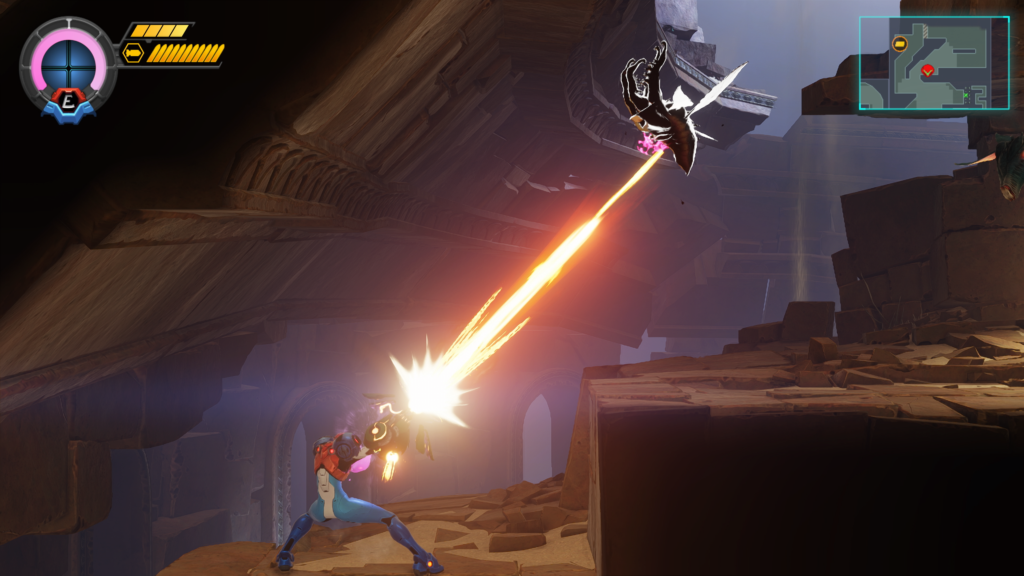
So, where does this feeling begin? It starts with the blueprint. When the original Metroid came out in 1986, it was revolutionary. It dropped players onto the hostile surface of Planet Zebes with almost no guidance. There was no in-game map. That feature wouldn’t arrive until Super Metroid and the instruction manual gave you only the bare essentials. The game didn’t just tell you a story; it expected you to uncover one. This approach, which we’d now call environmental storytelling, is the first and most crucial pillar of Metroid’s design.
Unlike so many modern games that hold your hand, Metroid respects your intelligence. The silence isn’t empty; it’s filled with unspoken questions. As you navigate the corridors of Zebes or Tallon IV, you become a kind of deep-space archaeologist. You’re piecing together a tragedy. Those crumbling statues in the Chozo Ruins of Metroid Prime aren’t just scenery; they are the haunting remnants of a civilization brought to ruin by the corruption of Phazon. The derelict space frigate at the start of that same game tells a story of carnage and desperation long before your Scan Visor starts filling in the grisly, text-based details. You see the bodies, the blasted-out hallways, and the failed barricades, and you understand what happened without a single line of spoken dialogue.
This method forces you into a state of active observation. Every room is a potential clue. In Super Metroid, when you’re deep in the final area, Tourian, you find the shattered container that once held the infant Metroid. That single image tells a more powerful story about captivity and loss than any cutscene ever could. The world itself is the main character, and it speaks in a language of ruin and decay. By refusing to give you easy answers, the game deepens your immersion and, by extension, your isolation. You are the only one there to witness the aftermath, the sole inheritor of these silent histories.
The Sound of Oppression
But a ruined world isn’t enough to create true dread. It’s how Metroid fills the silence that defines its oppressive atmosphere. This is the second pillar: the masterful use of sound and the lack of it. Most action games try to empower you with heroic, bombastic music. Metroid often does the exact opposite. Its soundtracks are frequently minimalist, ambient, and deeply alien. The music isn’t there to make you feel like a hero; it’s there to make you feel like an intruder.
Think of the echoing, almost biological thrum of Lower Brinstar in Super Metroid. It doesn’t sound like a place; it sounds like the inside of some colossal, dying creature. The game builds tension not just with what you hear, but with what you don’t. The sudden, jarring cut to near-silence when you enter the Wrecked Ship is one of the most unsettling moments in 16-bit gaming. Your mind races to fill the void, imagining threats that are far more terrifying than anything the game could show you.
The Metroid Prime series perfected this sensory oppression. It traps you inside Samus’s helmet, and for the first time, the isolation feels truly personal. You’re constantly aware of the hum of your own suit systems. The sound of rain sizzling on your visor, temporarily obscuring your vision, is a visceral reminder of your vulnerability. Occasional audio effects, like the faint skittering of a creature just out of view or the hint of your own breathing inside the helmet, create a palpable sense of paranoia. The atmosphere is an active antagonist, constantly reminding you that you are a stranger in a strange land, and you are not welcome. This claustrophobic anxiety is central to Metroid’s emotional core is a feeling that Metroid Dread would later evolve by giving that anxiety a physical form in its relentless EMMI robots.
Lonely Empowerment
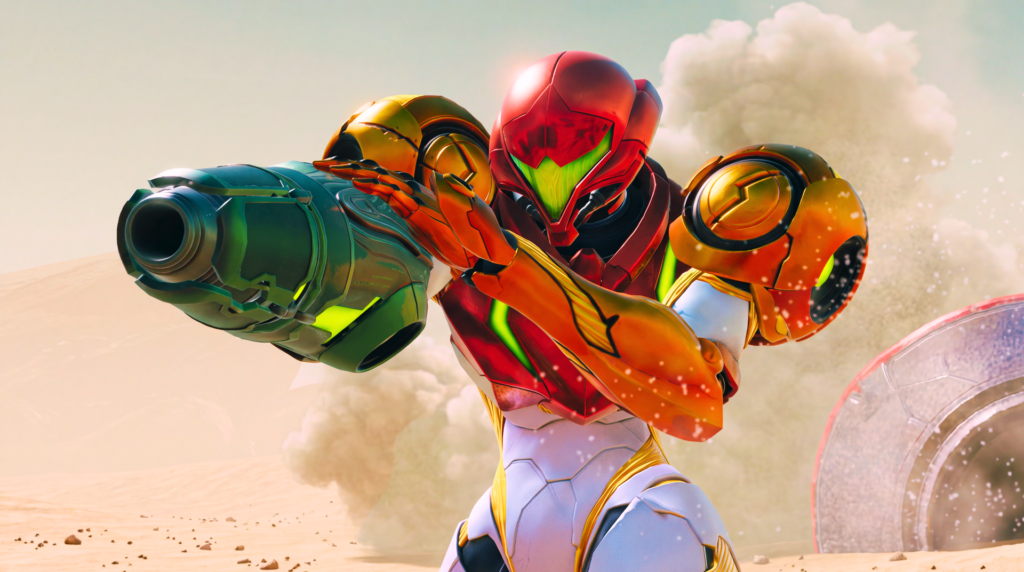
This carefully constructed world of environmental storytelling and oppressive atmosphere creates a profound sense of vulnerability. It could easily become frustrating, but this brings us to the final, and most brilliant, pillar: the transformation of that loneliness into a unique and powerful form of empowerment. Metroid breaks you down so it can build you back up, stronger than before.
The core of this is the series’ signature upgrade loop. Every new ability you find, the Morph Ball, the Varia Suit, the Wave Beam, is more than just a key to a locked door. It is a symbol of your growing mastery over an environment designed to crush you. You arrive on a planet weak and disoriented. Pathways are blocked, and enemies seem insurmountable. But with each upgrade, you are conquering the planet itself. An area that was once a deathtrap becomes a triviality. An enemy that terrified you is now dispatched with ease.
This journey is mirrored perfectly in the character of Samus Aran. For much of the series, especially in the early days, she is defined by her actions, not her words. She isn’t quipping or complaining; she is doing the job. While later games like Metroid Fusion and Metroid Dread would give her more of a voice, her character is fundamentally built on self-reliance. When you finally solve that impossible puzzle or defeat that colossal boss after hours of solitary struggle, the victory is entirely your own. No companion offered advice, no quest marker pointed the way. The triumph belongs to you and Samus. Even her famous gender reveal at the end of the first game was a shock that depended on how fast you finished, served to shatter the muscle-bound action-hero archetype of the time.
Conclusion
The unspoken genius of Metroid is its profound understanding of what makes a journey satisfying. It knows that true strength isn’t just about the power you wield, but the adversity you overcome to achieve it. The series laid the foundation for the “Metroidvania” genre by meticulously building a universe designed to make you feel small and utterly alone.
The loneliness is not a bug; it’s the most important feature. It’s the catalyst for one of the most satisfying power fantasies in gaming. This legacy raised a crucial question when Metroid Prime 4: Beyond was released in 2025. Trailers and gameplay showed Samus at times assisted by Galactic Federation soldiers, leading many to wonder if that perfect, beautiful isolation could be preserved. The reception was divided; while the game was praised for its atmosphere and environments, some critics and players found that the presence of talkative NPCs, particularly the character Myles Mackenzie, detracted from the series’ signature sense of solitude. It proved that even in a series known for evolution, the solitary journey remains its most powerful and cherished component.