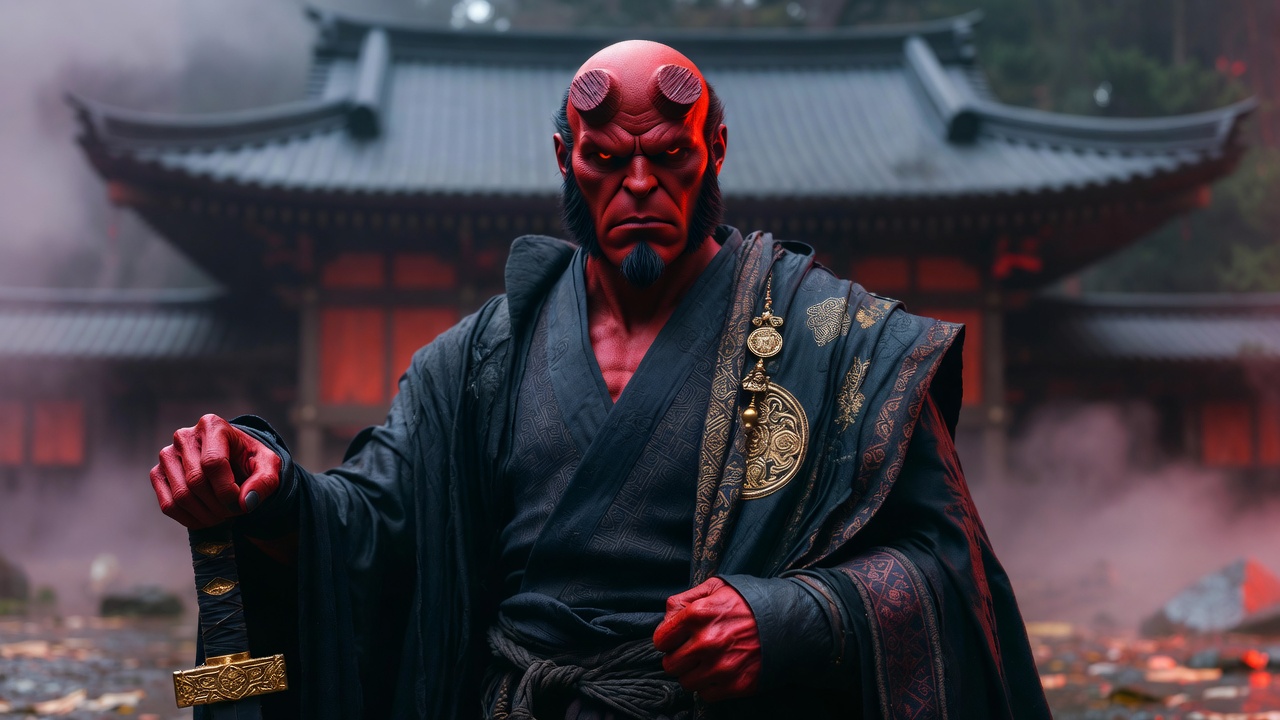
When you think of Hollywood adapting Hellboy, your mind will probably conjure up images of a giant red demon, a shadowy government agency, and a whole parade of occult monsters waiting to get punched. From Guillermo del Toro’s beloved blockbusters to a recent, gritty horror adaptation, the studios have had a few cracks at it. And you know what? They’ve repeatedly failed to capture the true essence of the character. The problem isn’t just about budget or star power; the failure to get Hellboy right reveals a fundamental misunderstanding of the character’s core conflict.
For decades, comic readers have watched these attempts with a mix of hope and frustration, because they know the secret isn’t in making him a quippy superhero or just another monster. It’s in the quiet tragedy of a man who looks like a demon, trying desperately to prove he’s human. In this video, we’ll break down why even the adaptation that was widely considered the most faithful, The Crooked Man, left audiences divided and what that tells us about the struggle to bring Mike Mignola’s creation to the screen.
It starts with a question: who, or what, is Hellboy? To Hollywood, he’s been a blockbuster action hero, a wisecracking brute, and a low-budget horror creature. But to understand why these portrayals always feel like something is missing, we first have to understand the source of the problem. Hollywood doesn’t just adapt Hellboy’s stories; it adapts his image, and in doing so, it consistently misses the soul.
Let’s begin with the films that, for many, defined the character: Guillermo del Toro’s Hellboy and Hellboy II: The Golden Army. These movies are beautifully crafted, imaginative, and filled with a genuine love for the monstrous and the magical. Ron Perlman’s performance is nothing short of iconic; he embodied the world-weary, blue-collar attitude of the character perfectly. He looked the part, he sounded the part, and for an entire generation, he was Hellboy.
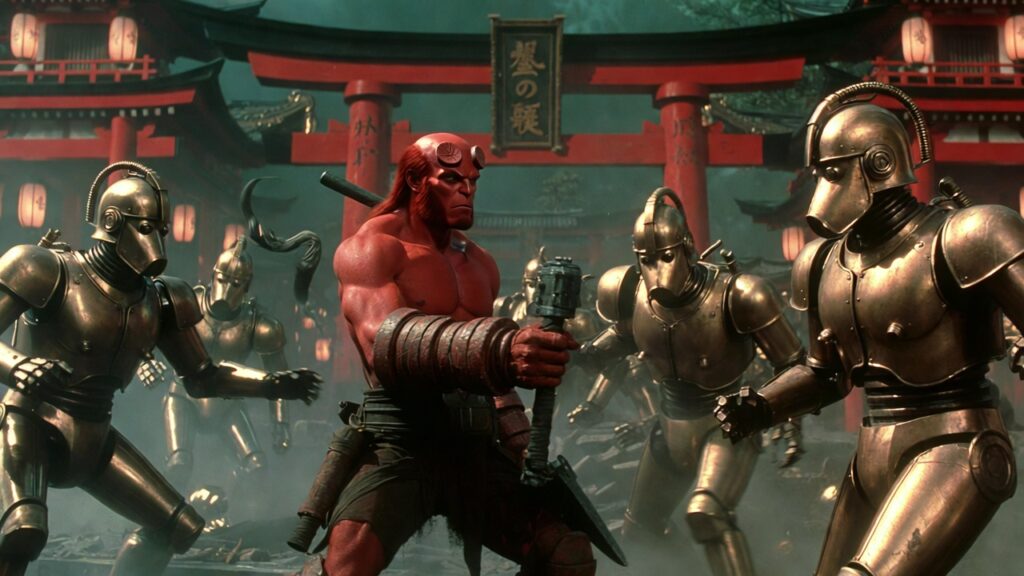
Del Toro, a master of dark fantasy, was the perfect director to visualize the grotesque and beautiful world of the B.P.R.D. The Golden Army, in particular, is a visual feast, a fairy tale for adults that pushed the boundaries of what a comic book movie could look like. These films were not failures; they were successful, well-loved, and brought the character to a massive new audience.
But here’s where the problem begins. To make Hellboy a viable blockbuster star, del Toro had to sand down some of the character’s most important edges. The focus shifted. The quiet, melancholic, pulp-horror investigations of the comics were largely replaced with epic, world-ending stakes. The romance with Liz Sherman, a fairly minor element in the books, became a central pillar of the films’ emotional core. The stories became grander, louder, and more aligned with the superhero formula audiences were flocking to.
Del Toro’s films are brilliant monster movies, but they aren’t quite Mignola’s Hellboy. They captured the look, the humor, and the heart, but they sacrificed the specific tone that makes the comics so unique: the lonely, atmospheric dread of a ghost story, the creeping horror of ancient folklore. They gave us Hellboy the hero, but we lost some of Hellboy the weary paranormal investigator, the guy who would rather just sit and have some pancakes.
After the struggle to get a third del Toro film made, the studio decided to reboot the franchise in 2019. The goal was clear: to create a darker, more violent, R-rated Hellboy that was truer to the horror roots of the comics. On paper, it sounded like what many hardcore fans had been asking for. The result, however, was a catastrophic failure.
The 2019 Hellboy, starring David Harbour, is a masterclass in missing the point. It mistook gore for horror, and a cynical, abrasive attitude for Hellboy’s signature world-weariness. The film felt less like a cohesive story and more like a checklist of comic book moments and characters thrown into a blender without any sense of pacing or purpose. It was an overstuffed mess, cramming multiple, complex comic storylines into a single film and leaving no room for characters or ideas to breathe.
The director, Neil Marshall, later suggested the script was perhaps too faithful, copying and pasting comic panels without properly adapting them for the screen, which created a disjointed narrative. This highlights a crucial trap in adaptation: faithfulness isn’t just recreating moments; it’s about translating the feeling and theme. The film was loud, bloody, and chaotic, but it lacked the quiet, gothic atmosphere that defines Mignola’s work. It was R-rated, but for all the wrong reasons. The horror in Hellboy’s comics is insidious and ancient; the horror in the 2019 film was largely just watching people get torn apart in unconvincing CGI. It was a violent overcorrection, and frankly, a bit of a shite film.
So we’ve seen the blockbuster approach and the hard-R misfire. Both tried to capture a facet of the character, but neither got the formula quite right. To understand the solution, we have to go back to the source, to the ink and paper where Hellboy was born. If you enjoy deep dives into the DNA of your favorite characters, consider subscribing. It helps us keep asking these big questions.
To understand why Hollywood struggles, you have to read Mike Mignola’s comics. You have to see his art. Mignola’s style is built on shadow. It’s a world of stark blacks, heavy inks, and gothic silhouettes, where what you don’t see is often more terrifying than what you do. His stories draw from a deep well of folklore, mythology, and the pulp horror of writers like H.P. Lovecraft.
The character of Hellboy was conceived almost as a joke: a big, red demon who files his horns down and works a nine-to-five job punching monsters for the government. He’s a blue-collar working man trapped in the body of a prophesied apocalypse-bringer. This is the central conflict that drives him. He is Anung Un Rama, the Beast of the Apocalypse, destined to bring about the end of the world. But he was raised by a kind human, Professor Bruttenholm, and all he wants is to be a man. He rejects his destiny at every turn, not through grand speeches, but through small, stubborn acts of defiance.
This internal struggle manifests as a profound sense of melancholy and weary resignation. Hellboy isn’t a wisecracking superhero; he’s a paranormal detective who’s seen it all and is perpetually unimpressed. His humor is dry, born from exhaustion. One of the most famous comic panels is just two words: “Oh, crap.” That’s Hellboy in a nutshell. He’s not staring down a godlike alien with a smirk; he’s looking at some ancient, tentacled horror and sighing, because this is just another Tuesday. Hollywood sees the big red fist, but they don’t see the heavy heart behind it.
This brings us to the latest attempt, 2024’s Hellboy: The Crooked Man. The film was promoted as a return to the character’s folk-horror roots, a direct adaptation of one of the most beloved comic storylines, with creator Mike Mignola himself co-writing the script. This was it. This was supposed to be the faithful adaptation.
And yet, the reaction was deeply divided.
On one hand, many viewers and critics praised it for what it got right. It successfully captured the specific, creepy, Appalachian folk-horror atmosphere of the comic. Jack Kesy’s portrayal was noted as being much closer to the source material: a more stoic, serious, and reserved paranormal investigator. It was a small, focused story, not another world-ending threat. For those who value comic accuracy above all else, The Crooked Man was a success in tone.
However, the film’s biggest strength was also its biggest weakness: its budget. Made for a reported $20 million, the film’s financial limitations were apparent on screen. Critics and viewers pointed out the low-budget feel, comparing its effects and production value to a fan film or a TV movie. While it nailed the atmosphere, it just lacked the cinematic polish and scale.
This created a fascinating split. One camp of fans finally got the tonally accurate, horror-focused Hellboy they always wanted and were willing to overlook the cheap look. The other camp, including critics and general audiences, couldn’t get past it, finding the execution clumsy and uninspired, regardless of its faithfulness. What this case proves is that getting the tone right isn’t enough. Mignola’s world needs a sense of scale and shadow that requires more than just a good script; it requires real artistry in execution.
So, why can’t Hollywood get Hellboy right?
The answer is a balancing act they have yet to master. Guillermo del Toro gave us the heart and the spectacle, but lost the quiet, creeping horror. The 2019 reboot chased the horror label but delivered only empty gore and misunderstood the character. And The Crooked Man, while perhaps the most faithful in spirit, showed that a great story on the page needs a certain level of cinematic craftsmanship to truly come to life.
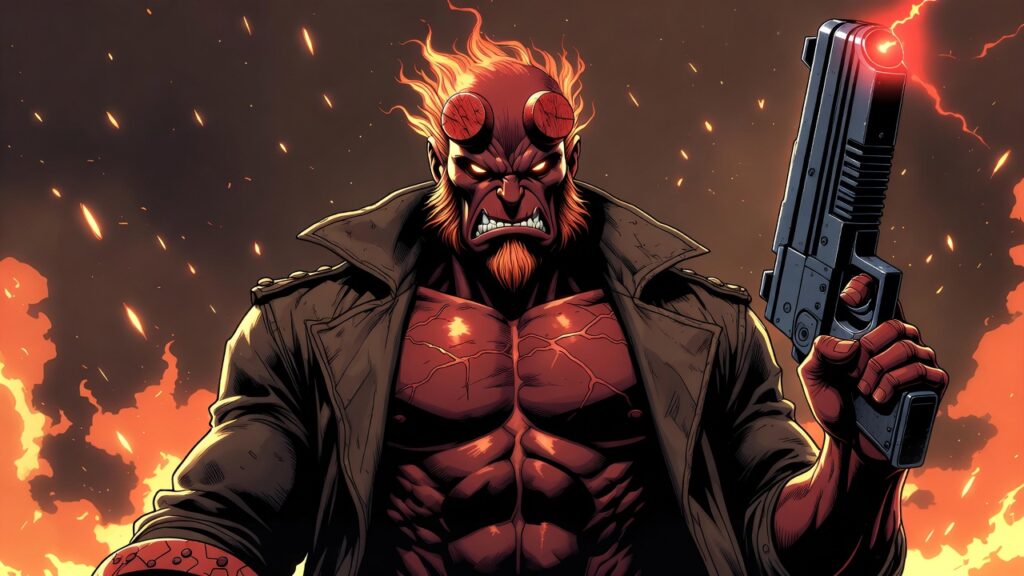
Hollywood’s problem is that it treats Hellboy as a choice between two genres: a big, fun superhero movie or a low-budget horror flick. But Hellboy is neither. He is a unique blend of pulp adventure, gothic tragedy, folk horror, and world-weary humor. He is a character defined by the contrast between his monstrous appearance and his deeply human soul.
To get Hellboy right, a filmmaker needs to embrace that contradiction. They need del Toro’s budget and eye for fantasy, the 2019 film’s R-rated ambition (used correctly), and The Crooked Man‘s commitment to Mignola’s specific tone. They need to understand that the biggest battles Hellboy fights are not with monsters, but with the prophecy that says he is one of them. Until they grasp that simple, tragic truth, Hollywood will keep trying, and they will keep getting it fucking wrong.
What do you think is the key to a perfect Hellboy adaptation? Is it even possible? Join the conversation in the comments below, and don’t forget to subscribe for more deep dives into the world of comics and film.
Anyway, that’s all I’ve got for this essay. Thanks for reading. Feed the Impulse.