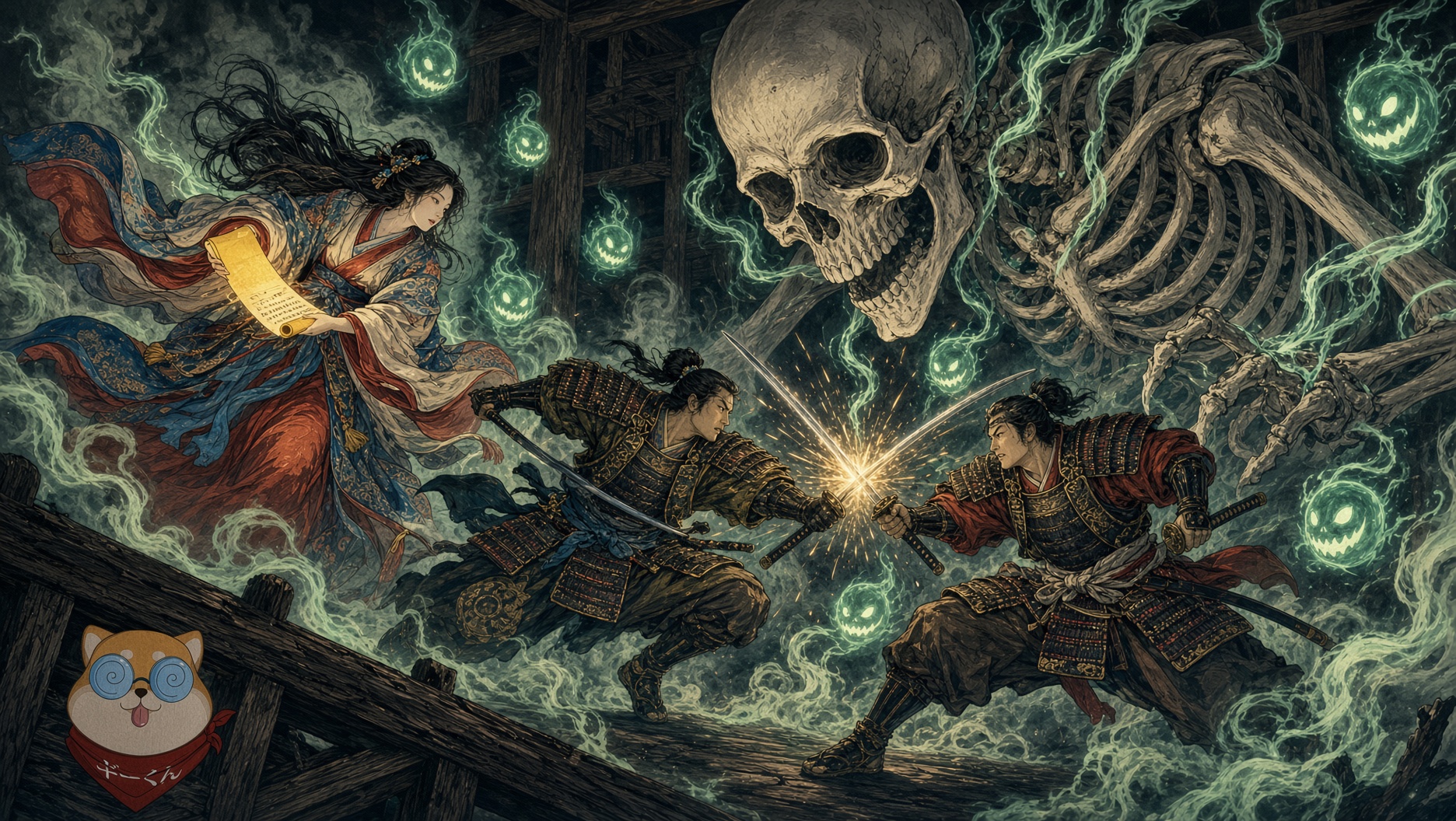
You know their names. You know their powers. But you probably don’t know their secret history. Think you know everything about Jujutsu Kaisen? What if I told you the curses Yuji Itadori battles aren’t just from the author’s head? That some are inspired by terrifying figures from Japanese legends that are centuries old? Today, we’re peeling back the curtain to reveal the folkloric figures that helped shape your favorite anime. We’re uncovering the history of how these Yokai. The supernatural creatures and spirits of Japanese folklore, have been reborn on our screens. From the King of Curses to the nine-tailed fox sealed inside a ninja, their stories didn’t start in a manga. They started in the shadows of Japan’s past.
The Two-Faced King and the Ogre’s Shadow
Let’s kick things off with one of the biggest villains in modern anime: Ryomen Sukuna from Jujutsu Kaisen. With his chilling arrogance and overwhelming power, he’s known as the King of Curses. But his origins are far older and more complex than you might imagine.
The name Ryomen Sukuna appears in the Nihon Shoki, or the Chronicles of Japan, a court-sponsored history text finished way back in the year 720. In this ancient book, Sukuna is described as a man from Hida province with one body, two faces, four arms, and four legs. The Nihon Shoki presents him as a villain, an enemy of the emperor who was eventually defeated. But in his home province of Hida, local legends tell a very different story. There, Sukuna is sometimes remembered as a hero, a guardian, and even the founder of a temple.
So, was he a demon or a hero? A monster or a rebel leader unfairly villainized by his conquerors? That ambiguity is exactly what makes the legend so powerful. It seems the creators of Jujutsu Kaisen tapped into this dual legacy, taking the frightening physical description from the ancient texts, the multiple limbs and faces and combining it with the reputation of a legendary force. The result is the terrifying King of Curses we know, a perfect modern adaptation of a figure who has been seen in different lights for centuries.
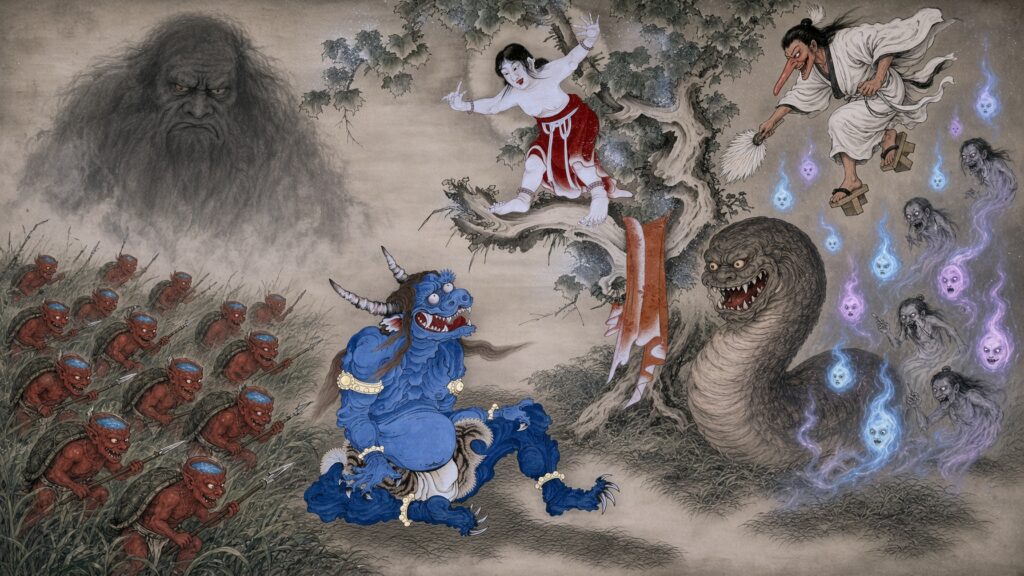
This legacy of monstrous figures brings us to another iconic creature: the Oni. The term “Oni” is often translated as demon or ogre, and they are typically shown as hulking, horned figures with brightly colored skin and iron clubs. They are classic antagonists in Japanese folklore, appearing in stories like Momotaro, where a hero boy defeats a band of marauding Oni.
And if you’re a Demon Slayer fan, that should ring a few bells. The antagonists in the series are called oni in Japanese, though the official English version usually calls them “demons.” The show puts its own unique spin on the legend. While traditional Oni can have various origins, nearly all the demons in Demon Slayer are created by their progenitor, Muzan Kibutsuji, though there are a few exceptions. The show also blends the traditional Japanese monster with elements that feel more like Western vampire lore, such as a fatal weakness to sunlight. So while the horned terrors that Tanjiro fights are clearly influenced by the imagery of classic Oni, they’re also a fresh take, proving that these old folkloric figures can still be reinvented in terrifying new ways.
The Cunning Fox Spirit
Next up, we have a creature you’ll recognize instantly: a powerful, multi-tailed fox spirit, capable of shapeshifting, breathing fire, and possessing humans. This is the Kitsune.
In Japanese folklore, Kitsune are incredibly complex beings. They can be intelligent, cunning tricksters, but also loyal companions and even messengers of Inari, the Shinto god of rice. A popular modern belief is that Kitsune grow more powerful with age, gaining a new tail every hundred years or so. After a thousand years, they can reach their peak with nine tails and nearly god-like powers.
In the world of anime, the most famous example is, of course, Kurama from Naruto. Kurama is the Nine-Tailed Fox, a monstrous “tailed beast” sealed inside the show’s protagonist, Naruto Uzumaki. The design certainly seems to pull from Kitsune legends. Kurama is an ancient, immensely powerful fox spirit, and his journey from a being of pure rage to Naruto’s trusted partner reflects the dual nature of the folkloric Kitsune, which can be both malevolent and benevolent.
But the influence doesn’t stop there. You might also know this creature from the world of Pokémon. The Pokémon Vulpix and its evolution Ninetales are widely seen as being inspired by the Kitsune. Ninetales, as the name suggests, has nine tails and is known for its incredible longevity and mystical powers. While the standard Ninetales is a Fire-type, aligning with the Kitsune’s ability of “fox-fire,” its regional variant, Alolan Ninetales, is an Ice/Fairy type, showing how the core legend can be adapted to fit new ideas. From a source of divine power to a destructive beast, and even a pocket monster, the Kitsune has proven to be one of the most versatile and enduring legends in all of Japanese folklore.
The Mountain Ascetic with Wings
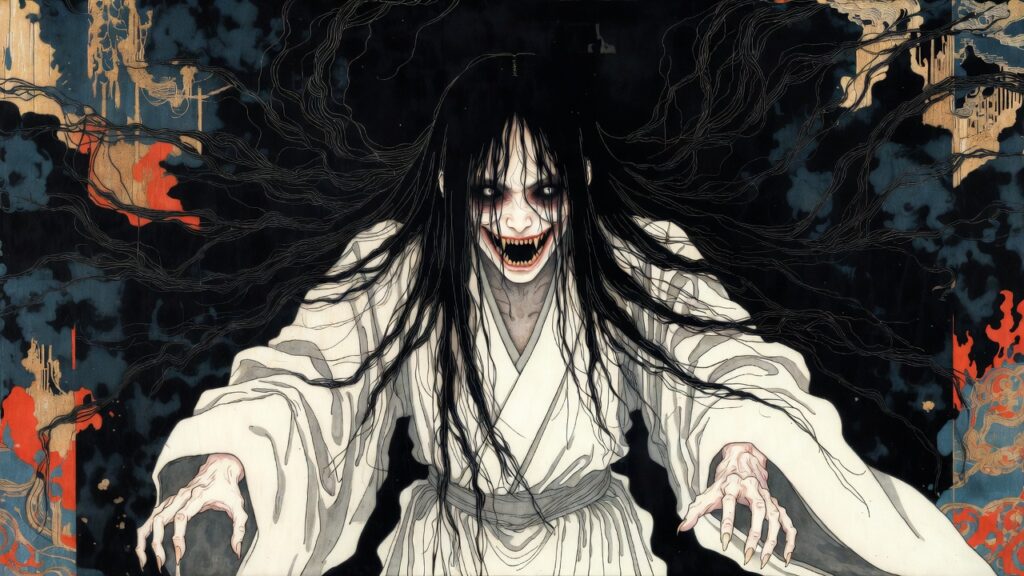
From the cunning fox, we now climb high into the mountains to meet a different kind of spirit: the Tengu. The name literally translates to “heavenly dog,” a term which comes from a Chinese legend about a destructive, dog-like meteor. In Japan, however, the legend slowly evolved into something totally different: powerful, winged spirits of the mountains and forests.
Folklore often presents them in two main forms, though this is a simplification. First is the karasu-tengu, or “crow tengu,” which has a more bird-like appearance with a beak and wings. The second, more well-known form is the daitengu, or “great tengu.” This type has a more human-like, red face, but with a distinctively long nose. Daitengu are depicted as masters of martial arts, proud, and easily offended, but also capable of mentoring worthy humans.
One of the most famous legends involves the great historical warrior, Minamoto no Yoshitsune. As a young boy, he is said to have learned his legendary sword skills from Sōjōbō, the king of the Tengu on Mount Kurama. This image of the Tengu as a reclusive, mountain-dwelling master swordsman is an archetype you see all over anime.
Take Sakonji Urokodaki from Demon Slayer, for example. He’s the stern, reclusive master who trains Tanjiro in the mountains, and what does he wear? A red Tengu mask. This seems to be a clear visual nod to the Tengu’s role as a secret teacher of immense skill. You can also see the Tengu’s influence in the world of Pokémon with a character like Shiftry, a creature known for its long nose, fan-like hands, and its life deep in the forest. Whether they appear as a masked master or a mysterious creature, the Tengu’s legacy as a guardian of the mountains and a keeper of ancient martial arts knowledge is woven deep into anime.
The River Child with a Secret Weakness
For our final creature, we leave the high mountains and head down to the rivers and lakes of Japan to find the Kappa. The name is written with characters for “river” and “child,” and they are one of Japan’s most famous and strangest Yokai.
Kappa are typically described as child-sized humanoids with green skin, a turtle-like shell, and webbed hands and feet. But their most important feature is the dish-like depression on their head, which many legends say must always be filled with water. According to this folklore, the dish is the source of the Kappa’s power; if the water spills, it becomes helpless. They are known for loving two things: cucumbers and sumo wrestling. But they also have a dark side and are blamed in cautionary tales for drowning people and animals.
Because of their legendary politeness, one popular way to defeat a Kappa is to bow deeply to it. Being a stickler for etiquette, the Kappa will often bow back, spilling the water from its head and losing its strength.
The Kappa’s image has softened over the years. While once a genuinely feared water demon used to warn children away from dangerous rivers, today the Kappa is often seen as a cute, mischievous mascot. You can find them everywhere in modern Japan, from statues to character goods. For example, the popular character franchise Sumikko Gurashi features a shy character who is simply named “Kappa,” a modern, cute interpretation of the creature. Though they may appear less frequently as major anime villains today compared to Oni or Kitsune, their cultural footprint is enormous. From the cucumber-filled sushi roll known as kappamaki to their enduring role as a warning about the dangers of water, the Kappa is a perfect example of how a terrifying figure can evolve into a beloved cultural icon.
Conclusion
So, from the dual-natured Ryomen Sukuna of Jujutsu Kaisen to the cunning Kitsune of Naruto, and from the mountain-dwelling Tengu to the river-child Kappa, it’s clear that the creators of our favorite anime are drawing from a deep well of folklore. These aren’t just random monsters; they are figures that represent ancient fears, a respect for nature’s power, and a connection to a cultural history that spans centuries.
These stories of Yokai are woven into the very fabric of Japanese culture, and they give these modern anime a depth and a history that resonates with us even today. The next time you watch an anime, look a little closer. You might just see an old legend staring back at you.
But this is just scratching the surface. What are some other anime characters that you think have a secret mythological origin?