For over 70 years, we’ve seen Godzilla throw down with giant titans, aliens from space, and even a robotic double of himself. We’ve been trained to believe these epic monster brawls are what he’s all about. We cheered when he took on King Ghidorah, we hid from him during Godzilla Minus One, and we’ve argued endlessly about his power level against pretty much every creature you can imagine.
But what if I told you that Godzilla’s greatest enemy was never another monster? What if the most persistent and terrifying villain in the entire saga has been hiding in plain sight this whole time, pulling the strings from the very beginning? This is the story of the one antagonist that has shaped Godzilla’s journey since 1954. An enemy that’s way more familiar, and frankly, more dangerous, than any kaiju.
The Birth of a Metaphor
To find this enemy, we have to rewind all the way back to 1954. Director Ishirō Honda unleashes Gojira on Japan, and it’s not some heroic blockbuster. It’s a straight-up horror film. The original Godzilla was a walking, breathing metaphor for the atomic bomb. His scarred, gray skin was designed to look like the keloid scars left on radiation burn survivors. His very existence was a nod to recent history, influenced by the real-life tragedy of the Daigo Fukuryu Maru, a Japanese fishing boat that was accidentally irradiated by the fallout from the American “Castle Bravo” H-bomb test.
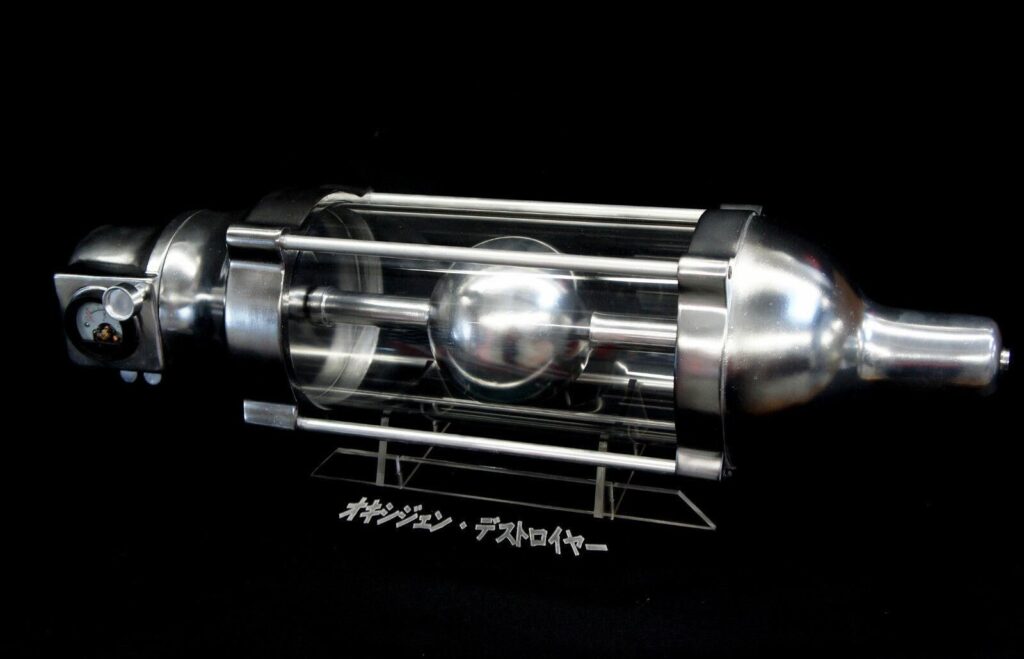
The real enemy in that first movie wasn’t some three-headed space dragon. It was us. Godzilla was the physical result of nuclear devastation, the consequence of humanity messing with powers far beyond our control. He was presented as an unstoppable event, like a tidal wave or an earthquake, punishing mankind for its arrogance. His rampage through Tokyo was a chilling echo of the destruction that was still a fresh, open wound in the nation’s memory. Godzilla was born from our actions, a ghost of our own making. And the movie’s final message isn’t one of victory, but a grim warning. After Godzilla is killed by yet another human invention, the Oxygen Destroyer, Dr. Yamane says that if nuclear testing continues, “another Godzilla may appear somewhere in the world again.” The cycle had begun.
The Enemy in Disguise
As the Showa era rolled on through the 60s and 70s, Godzilla’s job description changed. He became a hero, the protector of Earth against a parade of increasingly weird monsters. He fought aliens, giant shrimp, and cyborgs. You’d be forgiven for thinking his original purpose was gone. But look a little closer. Even when the villain was an alien like King Ghidorah, the conflict was often kicked off or made worse by human stupidity.
The best example of this is 1971’s Godzilla vs. Hedorah. Hedorah, the Smog Monster, is a creature that literally eats pollution to grow stronger. It arrives from space but becomes a planet-killer by feeding on our industrial waste. The more we pollute, the bigger it gets. Hedorah wasn’t just a monster; it was the embodiment of a real-world crisis that was choking Japan at the time. Godzilla, acting as a kind of symbol for the planet itself, is forced to fight a creature made from our own toxic garbage. The other monsters were villains, sure, but they were often just the symptoms. The disease, the true antagonist, was still humanity’s talent for self-destruction.
A Return to Destructive Roots
Then, in 1984, the franchise hit the reset button. The Heisei era dragged Godzilla back to his terrifying roots as a pure destructive force, and with him came a sharper look at his real enemy. This time, the threat wasn’t just bombs or pollution, but the very systems that run our world.
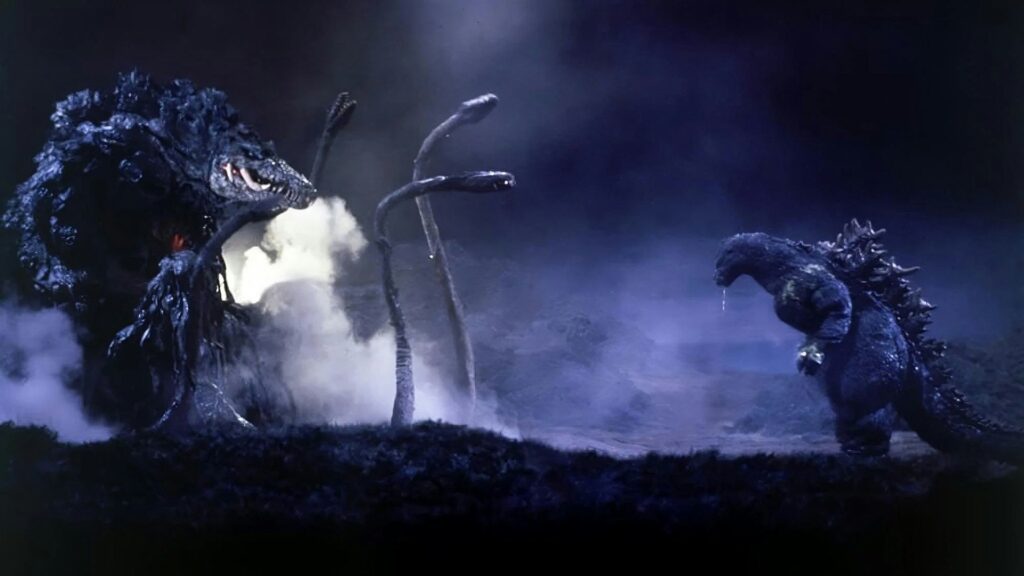
Take Godzilla vs. Biollante. Biollante is a tragic monster, created in a lab from a blend of Godzilla’s cells, a rose, and the DNA of a scientist’s dead daughter. She is the direct result of genetic engineering fueled by grief, ambition, and corporate espionage. The enemy here is science without a conscience.
Then you have Godzilla vs. Destoroyah, which brings the whole thing full circle. Destoroyah is a monster born from the very weapon used to kill the first Godzilla: the Oxygen Destroyer. Its detonation in 1954 mutated a colony of microscopic Precambrian organisms in Tokyo Bay, causing them to evolve over decades into a single, nightmarish creature. The ultimate enemy was the “solution” to our first problem, coming back to haunt us. In the same film, Godzilla himself becomes a victim, his own nuclear heart overheating and threatening to cause a global meltdown. The enemy wasn’t one mistake, but the chain reaction of mistakes we never seem to learn from.
The Enemy in the Mirror
This theme gets even clearer in the modern movies. In 2016’s Shin Godzilla, the monster is just one part of the horror. The true nightmare is the slow, ineffective, and painfully realistic government bureaucracy trying to stop it. The film is a brutal satire of political red tape, filled with endless meetings and officials who are completely unprepared for a real crisis. The terror in Shin Godzilla is watching a system fail its people in real-time, a feeling that hit home for audiences who knew the official response to real-world disasters.
The American MonsterVerse takes this idea and runs with it. In Godzilla: King of the Monsters, the people who unleash Ghidorah and the other Titans aren’t aliens. They’re a group of radical eco-terrorists led by Alan Jonah, but it’s Dr. Emma Russell who pulls the trigger, believing humanity is a virus and the Titans are the cure. The main villains are humans, driven by a twisted ideology, who decide to commit mass murder to “restore balance” to the planet.
And of course, there’s Godzilla Minus One. Set in post-war Japan, the title, as explained by its director, says it all. The nation is already at “zero,” destroyed by war. Godzilla’s attack plunges it into a “negative one” state. The monster here is a metaphor for the bottomless despair, survivor’s guilt, and trauma of a people failed by their own leaders. The characters aren’t just fighting a giant monster; they’re fighting for a reason to keep living after being told their lives were expendable. Godzilla is their unresolved pain made real.
The Grand Unifying Enemy
So, after all this time, who is Godzilla’s real enemy? It’s not Ghidorah. It’s not Mechagodzilla. It’s not Kong.
Godzilla’s most consistent and fundamental enemy has always been us. Humanity.
It’s our arrogance. Our ambition. Our endless talent for self-destruction. In many of his most iconic films, Godzilla is a reaction. He is a force of nature that is awakened, drawn out, or created by our failings. He is the living embodiment of the phrase “actions have consequences.”
When we split the atom and built the bomb, we created the 1954 Godzilla. When our factories poisoned the planet, we empowered Hedorah. When our scientists played God with genetics, we got Biollante. When our desperate superweapon was used, its ghost returned as Destoroyah. When our governments became paralyzed, Shin Godzilla rose from the bay. And when we turned on ourselves with radical ideologies, the Titans were unleashed.
Godzilla is a mirror. He reflects the biggest anxieties and failures of the era he appears in. While his role may change, from destroyer, to anti-hero, to a reluctant guardian of balance, the one constant is that humanity is almost always the one that lights the fuse.
Conclusion
From his tragic start as a symbol of nuclear horror to his more recent roles, Godzilla’s story has rarely been just about monsters fighting. It’s been about humanity fighting itself, with Godzilla acting as the apocalyptic referee. You could even say he’s the planet’s immune response, and we’re the infection.
So as we look to the future of the franchise, like the upcoming sequel to Godzilla x Kong or Toho’s next project, the question isn’t just “What monster will Godzilla fight next?”. The real question is: what new mistake will we make to bring him roaring back to our shores? What part of ourselves will we have to face this time?